Tourism Committee all in for Brazilian Casinos
Recently updated on January 26th, 2026
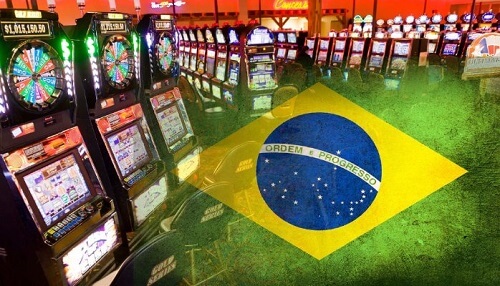
Gambling laws in Brazil have been pending for years, with different bills being stalled in federal talks. This week, the Tourism Committee has called for Brazilian casinos to be legalised to boost tourist revenues. Paulo Azi, Federal Deputy for the organisation, spoke to local news outlets after launching the electronic visa for Americans.
These visas will allow US citizens to apply electronically for Brazilian visas. More so, they will enjoy a US$40 (±NZ$54) fee, as opposed to the usual US$160 (±NZ$217). A simpler application process has also been introduced this week. This bid for more USA tourists is one of many measures by the country to attract more visitors. Marx Beltrão, Brazil’s Minister of Tourism, also spoke at the launch event. He claims that turning Brazil into ‘an attractive tourism destination’ would need the ‘right formula’ to be able to start earning the country US$170 million a year (±NZ$230 million). So, Brazilian casinos may just have a chance.
Legal Gambling Expectations
Gambling is generally illegal in Brazil, with a few exceptions. However, lawmakers have yet to approve a reform for gambling laws. At least two gambling proposals have been presented to the National Congress, but were never voted on. One was presented to the Chamber of Deputies, and the other to the Senate. The Senate proposal has gained a lot of attention because it calls for gambling expansion in the country.
Provided in the proposal are casino gambling laws, for land-based and online betting options. Unfortunately, the bill has been stalled in the Senate’s Constitution and Justice Commission. Commissioners have not been able to cast their votes, and no date is set for them to do so. Potentially, a handful of international casino operators could invest in Brazilian casinos if they are made legal.
Brazilian Casinos in the News
In 2017, a ‘demo’ casino came under fire for offering real money bets on slot machines. Their games were confiscated, but led to a pretty interesting situation. This casino in particular exposed loopholes in the law that could be avoided with proper regulations. Sadly, it seems that Brazilian casinos may have to wait a while with legislators stalling each proposal.
Published by Taralynn
January 26, 2026
Categorie(s): Big Wins, Latest News, New Zealand, North Island, South Island
About the Author

Taralynn Engels is a seasoned casino news writer with a passion for keeping her readers up-to-date with the latest happenings in the gambling industry. With over five years of professional writing experience, Taralynn has developed a deep understanding of the casino industry and a knack for delivering engaging and informative content.
Aside from her in-depth knowledge of the casino industry, Taralynn possesses excellent writing skills that allow her to craft captivating narratives that keep readers hooked until the last word. Her ability to simplify complex concepts and present them in an accessible manner guarantees that her articles are enjoyed by both seasoned casino enthusiasts and newcomers alike.
More Posts from Taralynn.
Related Posts
Published by Mark
February 23, 2026
Categorie(s): Big Wins, Latest News, New Zealand, North Island, South Island
Recently updated on February 23rd, 2026There seems to be good news coming the way of former Wynn Resorts CEO Steve Wynn. The Massachusetts Gaming Commission decided to settle the lawsuit filed last November against the casino magnate over alleged misconduct. 2018 was a turbulent year for the American billionaire, with numerous scandals that culminated in […]
Published by Taralynn
January 29, 2026
Categorie(s): Latest News, New Zealand, North Island, South Island
Recently updated on January 29th, 2026There’s been a lot of concern by gambling stakeholders surrounding sportsbook ads featuring soccer players from arguably the most popular league in the world. The latest team in the spotlight is Tottenham Hotspurs. The English team is affiliated with 1XBET. The sportsbook has a multimillion-dollar partnership deal with the London […]
Published by Taralynn
April 3, 2026
Categorie(s): Big Wins, Latest News, New Zealand, North Island, South Island
Recently updated on April 3rd, 2026Sir Richard Branson has announced the finalisation of a deal that will see the Virgin Group take over the Hard Rock Hotel & Casino in Las Vegas. The Virgin Group did not reveal the sale price. According to reports, Virgin Hotels Las Vegas will open in 2026. The British billionaire […]
Published by Mark
March 12, 2026
Categorie(s): Latest News, New Zealand, North Island, South Island
Recently updated on March 12th, 2026Exploiting a gap in the law, SkyCity plans to launch a European-based online casino later. And the New Zealand government can’t do anything to stop it. It’s estimated that New Zealand gamblers export $400 million a year playing at unregulated offshore casinos. Now, SkyCity wants it $180 million piece of […]
Published by Taralynn
March 5, 2026
Categorie(s): Big Wins, Latest News, New Zealand, North Island, South Island
Recently updated on March 5th, 2026Last week, Crown Resorts sold its majority share in CrownBet to Canadian gaming firm, the Stars Group. This move is just one of many cost-cutting measures the company has had to make in the past year after the arrests of its Macau employees. So far, the Aussie gambling operator has […]